


Introduction: The Final Step in Producing High-Quality Aggregate — The Bucket Wheel Washers
One of the most critical stages determining the quality of the final product at a sand and gravel production plant is the washing and dewatering process. Natural sand obtained from crushing-screening or screening-washing units cannot be sold directly onto the market due to its clay, silt and organic impurity content. This is where the drum washer comes into play. This equipment, which removes dust and silt from the fine-grained material extracted from riverbeds, ensures the production of clean, high-quality sand required for numerous applications such as ready-mix concrete, plaster, mortar and road construction.In this comprehensive guide, we will examine what a bucket wheel washer is, its operating principle, the function of the transport hopper and bucket system, its technical specifications, a comparison with other sand washing equipment, and the criteria to consider when selecting the right washer, all from an engineering perspective.What is a Bucket Wheel Washer?
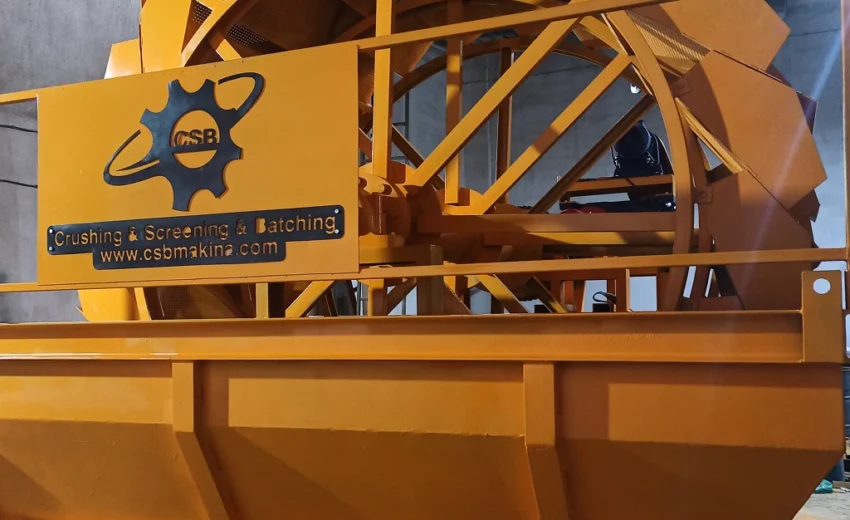
A bucket wheel washer is a washing and dewatering machine used to remove dust and silt from fine-grained material (natural sand) in the 0.3–0.5–0.7 mm size range, obtained from riverbeds. It is a type of washer that minimises the risk of fine material (silt) being lost whilst washing away clay, mud and similar contaminants present in natural sand (0–5 mm) obtained from a screening-washing unit or a crushing-screening-washing unit.Bucket wheel washer are washing and dewatering machines designed to maximise the purity of sand by removing clay and silt from it. At the same time, they also perform the dewatering function by allowing water within the sand to drain through the perforated (holed) sheets in the buckets. This dual-function design (both washing and dewatering) makes bucket washers an indispensable component of sand washing plants.The Primary Purpose of a Bucket Wheel Washers
Natural sand, which is used as a building material, consists of a mixture of quartz grains, rock debris, mica and similar minerals, and has a loose texture. Fine impurities such as clay and silt present in this sand can adversely affect the strength of the material in the production of ready-mixed concrete and mortar. For this reason, the sand washing process is an essential stage in production to ensure that the final product can be supplied to the market as a clean, high-quality aggregate that complies with TS EN standards.General Features and Advantages of the Bucket Wheel Washer
The key features of high-quality bucket wheel washer available on the market can be listed as follows:- Robust body construction: It offers many years of uninterrupted service life.
- Low-speed drive system: It generally operates at a speed of between 1.5 and 2.5 rpm, carrying out the washing process in the optimal time and preventing the loss of fine material.
- Easy to maintain: Thanks to its simple design, maintenance and servicing can be carried out quickly and at low cost.
- Minimum floor space: Thanks to its compact design, it takes up little space within the facility, making it easy to install in confined areas.
- Superior cleaning performance: Thanks to the combination of the transport pocket and bucket system, it ensures highly efficient clay-slurry separation.
- Low power consumption: For example, it can operate efficiently with motors of relatively low power, such as 2.2 kW; this reduces operating costs.
- Water saving: Thanks to its efficient design, effective washing can be achieved with lower water consumption.
- Ease of installation: Thanks to their simple design, they allow for quick installation during plant set-up.
- Ease of transport: Wheeled models reduce transport costs thanks to their modular design and the fact that they can be transported inside enclosed lorry trailers or containers.
Technical Components of a Bucket Wheel Washer
1. Settling Tank
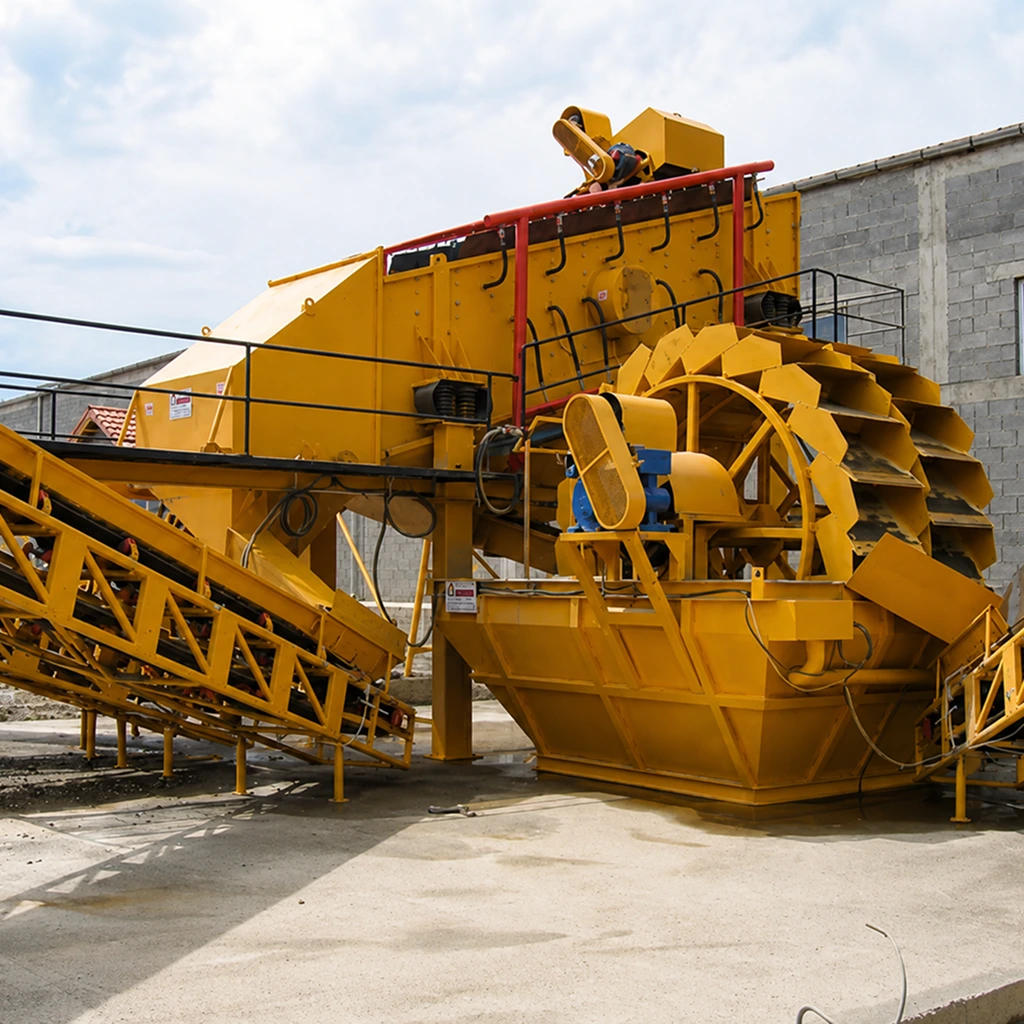
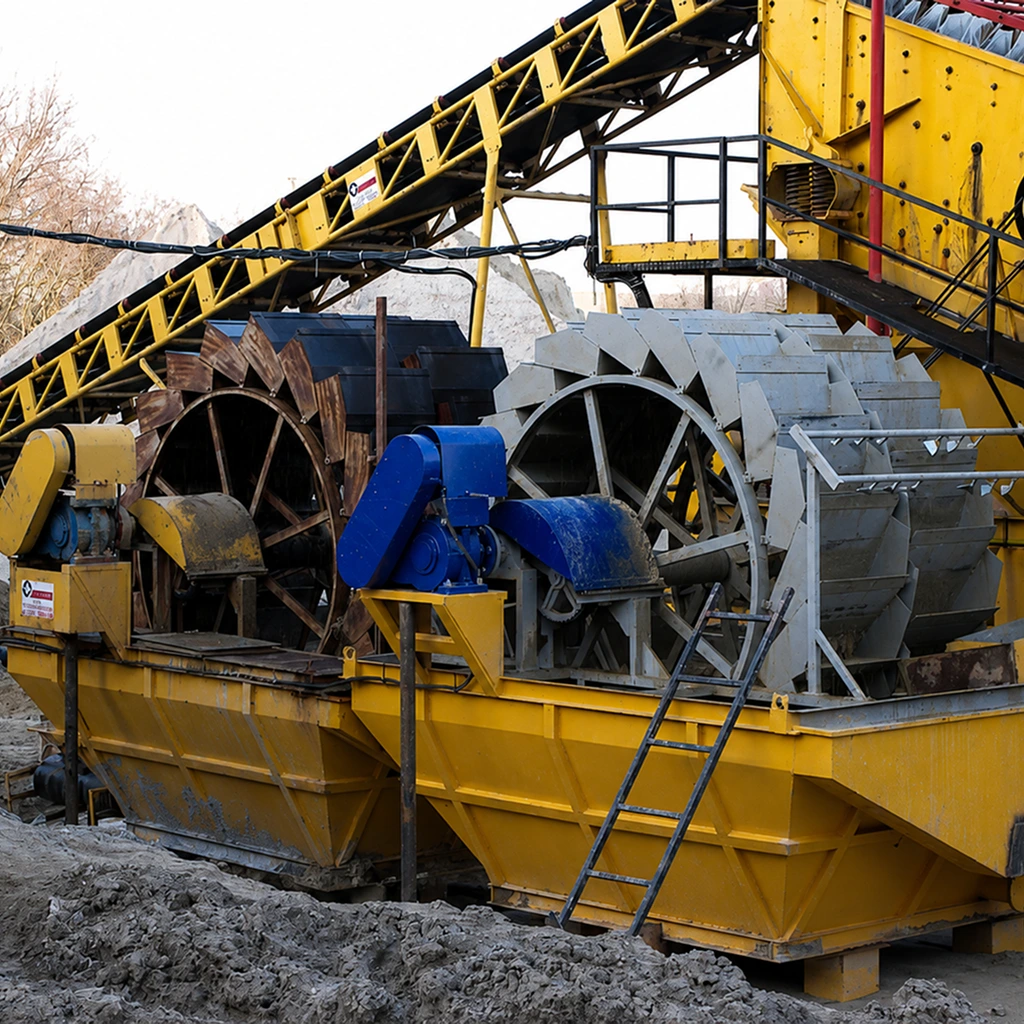
This is the main tank structure into which the sand and water mixture is fed and where the buckets rotate. The tank is designed to be of sufficient volume to ensure that the material remains in the water for a sufficient period of time to separate the clay from the silt.2. Perforated Buckets (Drums)
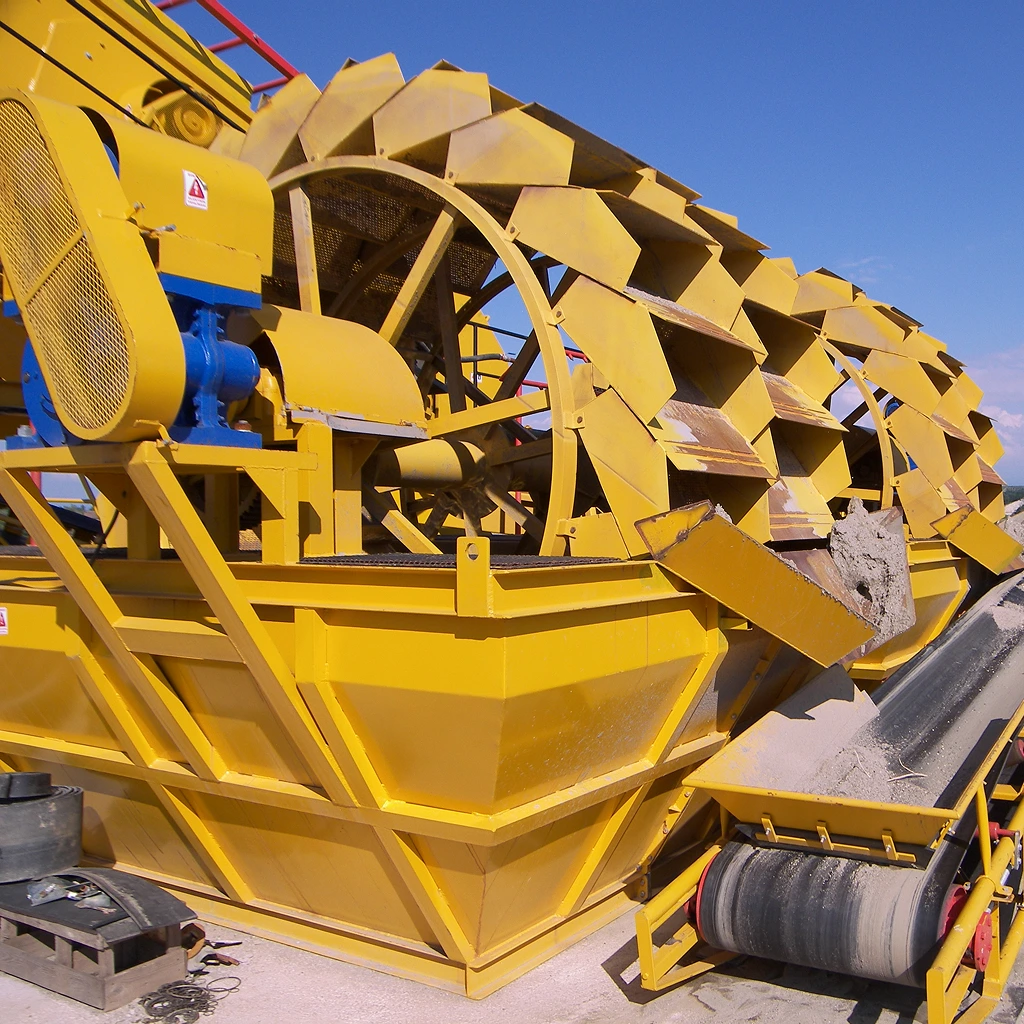
This component, which forms the heart of the machine, consists of buckets with a perforated sheet metal structure. The buckets pick up the material from the trough through a rotating motion and carry it upwards, whilst allowing water to drain through the perforations, thereby performing the dewatering function.3. Carrying Pouch (Steel Wire-Reinforced)
This section, lined with durable steel wires, facilitates the transfer of fine material into the bucket system. Thanks to its wear-resistant construction, it offers a long service life.4. Drive Motor and Gearbox
The motor and gearbox assembly that drives the rotation of the drums is generally designed to operate at low speed and high torque. In a typical application, a 2.2 kW motor can achieve the ideal wash cycle time at a speed of 2.5 rpm.5. Speed Control System (Inverter)
The inverter-drive system enables the rotation speed of the buckets to be precisely adjusted according to the level of contamination in the material and the required capacity.6. Drainage Channel
This is the outlet section where the dewatered and cleaned sand is directed from the other end of the conveyor system to the next process (storage or packaging).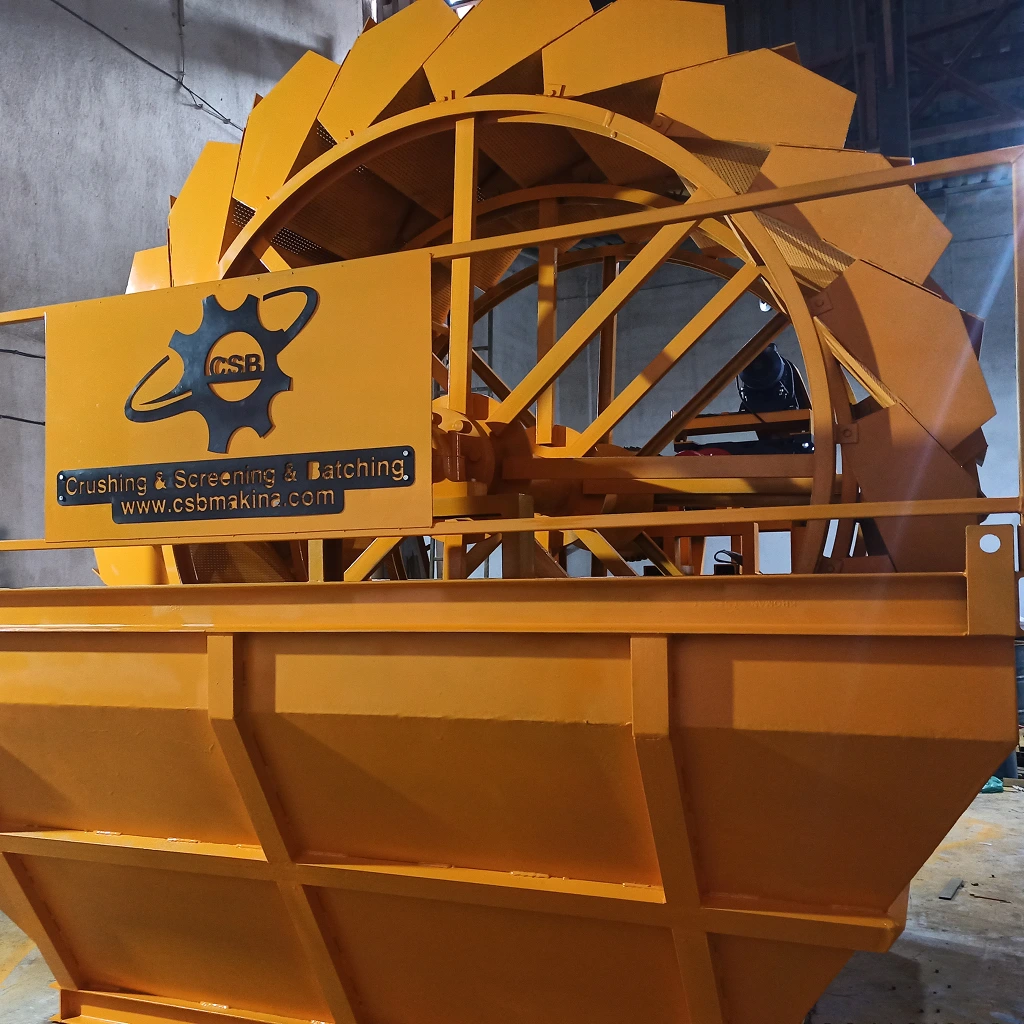
Criteria to Consider When Choosing a Bucket Wheel Washer
Choosing the right bucket wheel washer is a decisive factor in terms of the plant’s efficiency and product quality. The following criteria should be taken into account when making a selection:- Particle size of the material to be processed: Bucket washers specifically designed for thin materials in the 0.3–0.7 mm range should be used.
- Contamination level of the material (percentage of clay and silt): For materials with a high contamination level, systems with inverters, which allow speed control to be adjusted over a wider range, should be preferred.
- Target hourly capacity: The size of the hopper, the length of the drum and the motor power should be determined according to the plant’s capacity requirements.
- Tolerance for thin material loss: If it is important not to lose the valuable fine sand fraction, low-speed bucket washer systems should be given priority.
- Water consumption and water recovery potential: In areas where water resources are limited, designs that are water-efficient and consume little water should be prioritised.
- Mobility needs: In projects requiring frequent changes of location, wheeled, portable bucket-type washers offer advantages.
- Ease of maintenance: Models with a simple and robust design reduce long-term operating costs.
- Energy efficiency: Low-power motors (e.g. 2.2 kW) help to optimise operating costs.
Points to Bear in Mind When Maintaining a Bucket Wheel Washer
Regular maintenance procedures must be carried out to ensure that the bucket wheel washer operates efficiently and has a long service life:- Periodic checks should be carried out to ensure that perforated sheets are not blocked or worn.
- Monitoring the wear level of the steel wires in the conveyor pocket and replacing them when necessary.
- Adherence to the manufacturer’s recommendations regarding the lubrication intervals for the drive motor and gearbox.
- Regular testing to ensure the inverter-driver speed control system is operating correctly.
- Regular cleaning of the sludge and sediment that accumulates in the settling tank.
- Inspection of the chassis and wheel system on wheeled models before and after transport.
Applications of the Bucket Wheel Washer
Bucket wheel washers have a wide range of applications across various sectors:- Ready-mixed concrete production: In ensuring that the aggregate to be used in concrete plants meets the relevant quality standards.
- Plaster and mortar production: In the production of high-quality plaster sand by cleaning the fine sand fraction.
- Road and infrastructure projects: In the decontamination of sand to be used as fill and sub-base material.
- Sand and gravel quarries: In the processing of natural sand obtained from riverbeds and alluvial deposits.
- Integrated crushing, screening and washing plants: The crushed material is at the final washing and dewatering stage following screening.
- Mobile sand washing units: In projects that require frequent site changes and where ease of transport is a priority.
Factors Affecting the Capacity of a Bucket Wheel Washer
The hourly processing capacity of a bucket wheel washer varies depending on the following parameters:- Drum diameter and length: Larger-diameter and longer drums offer a higher volumetric capacity.
- Drive speed (rpm): As the rotational speed increases, the theoretical capacity may increase; however, this also carries the risk of fine material loss. It is therefore necessary to strike a balance between increased capacity and the loss of fine particles.
- Contamination level of the material: With material that has a high level of contamination, a longer washing time (and therefore a lower feed rate) may be required to achieve the same capacity target.
- Moisture content of the feed: Feeding material that is too dry or too wet can affect the machine’s efficiency in various ways.
- Water flow rate: It is not possible to carry out effective washing and separation without an adequate water supply; the water flow rate must be adjusted in proportion to the material flow rate.
Current Trends in Bucket Wheel Washer Technology
Some developments that have come to the fore in the sand-washing sector in recent years are also having a direct impact on bucket-type washer designs:- Automation integration: Modern bucket wheel washer can be integrated into SCADA or PLC-based automation systems throughout the facility, enabling them to be monitored and controlled remotely. This allows parameters such as rotational speed and water flow rate to be optimised in real time.
- Use of wear-resistant materials: Special wear-resistant alloys used in perforated sheets and conveyor belt wires help to extend maintenance intervals.
- Modular and portable designs: Particularly with the rise in demand for mobile sand-washing plants, bucket wheel washer models featuring quick installation and a demountable design are becoming increasingly common.
- Motor selection with a focus on energy efficiency: Low-power-consumption, high-efficiency electric motors meet the demand for reducing businesses’ carbon footprints and energy costs.
Conclusion
The bucket wheel washer is a critical washing and dewatering piece of equipment that determines the final product quality in sand and gravel production plants. By removing clay, silt and organic contaminants from fine-grained natural sand extracted from riverbeds, it ensures that a clean aggregate is obtained that meets the standards required for the production of ready-mixed concrete, plaster and mortar. Thanks to their low-speed operating principle, bucket wheel washer minimise the loss of fine material (screen loss) whilst combining both washing and dewatering functions in a single machine, thereby enhancing efficiency in plant investments.Selecting the correct bucket wheel washer requires a comprehensive assessment of numerous parameters, including the particle size of the material to be processed, the level of contamination, the target capacity, water consumption and mobility requirements. For businesses planning to invest in a sand washing plant, prioritising technical details—such as a low-speed drive system, speed control capabilities and ease of maintenance—rather than focusing solely on capacity figures when selecting a bucket wheel washer will be decisive for the plant’s long-term efficiency and product quality.Frequently Asked Questions
What size of materials can a drum washer process?
Bucket Wheel Washers are generally capable of processing fine-grained materials in the 0.3–0.5–0.7 mm range, whilst some models can process sand and small mineral materials in the 0.3–7 mm range for washing and dewatering purposes.
Why is the rotational speed of a bucket wheel washer kept so low?
A low rotational speed (typically in the range of 1.5–2.5 rpm) ensures that as much fine sand as possible is captured along with the water. Whilst the risk of fine-grain loss increases in high-speed systems, a low rotational speed minimises this risk.
What is the difference between a bucket wheel washer and a screw washer?
Bucket wheel washers perform both washing and dewatering functions simultaneously using perforated buckets, thereby reducing the risk of material loss in fine-grained materials. Helical washers, on the other hand, operate using a rotating spiral shaft and are generally preferred for applications involving coarser-grained materials and higher capacities.
How does dewatering take place in a bucket wheel washer?
The dewatering process is carried out by allowing the water in the sand to drain through the perforated sheets in the buckets. As the bucket rotates and lifts the material upwards, the water drains down through the perforated surface.
Why is speed control important for a bucket wheel washer?
The speed control provided by the inverter-driver enables the rotation speed of the buckets to be optimised according to the material’s contamination level and the required capacity. This allows materials with different contamination levels to be processed efficiently on the same machine.