


Introduction: The Role of the Vibrating Screen in Crushing and Screening Plants
A crushing and screening plant (crusher plant) forms an integrated production line comprising a feeder, crushers (primary, secondary, tertiary) and conveyor belts; however, the final quality control point of this line is the vibrating screen. The correct classification of the crushed material according to the size ranges specified by the customer directly determines the plant’s product quality and sales value.A vibrating screen is a mechanical classification piece of equipment that ensures particle size distribution in the crushing and screening process by separating the material pile into different fractions according to the mesh size. In this guide, we will examine the structural characteristics, operating principle, layer system, technical components and the criteria to be considered when selecting the correct screen from an engineering perspective.What is an Inclined Screen (Standard Type Vibrating Screen)?
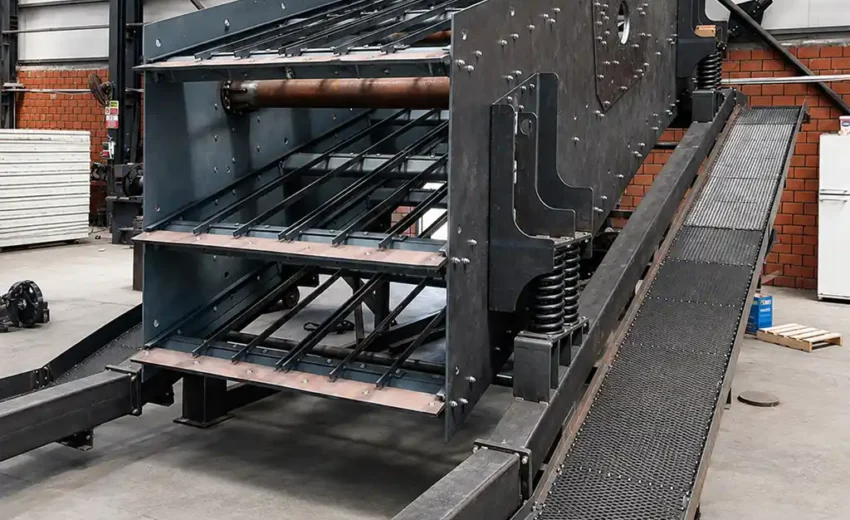
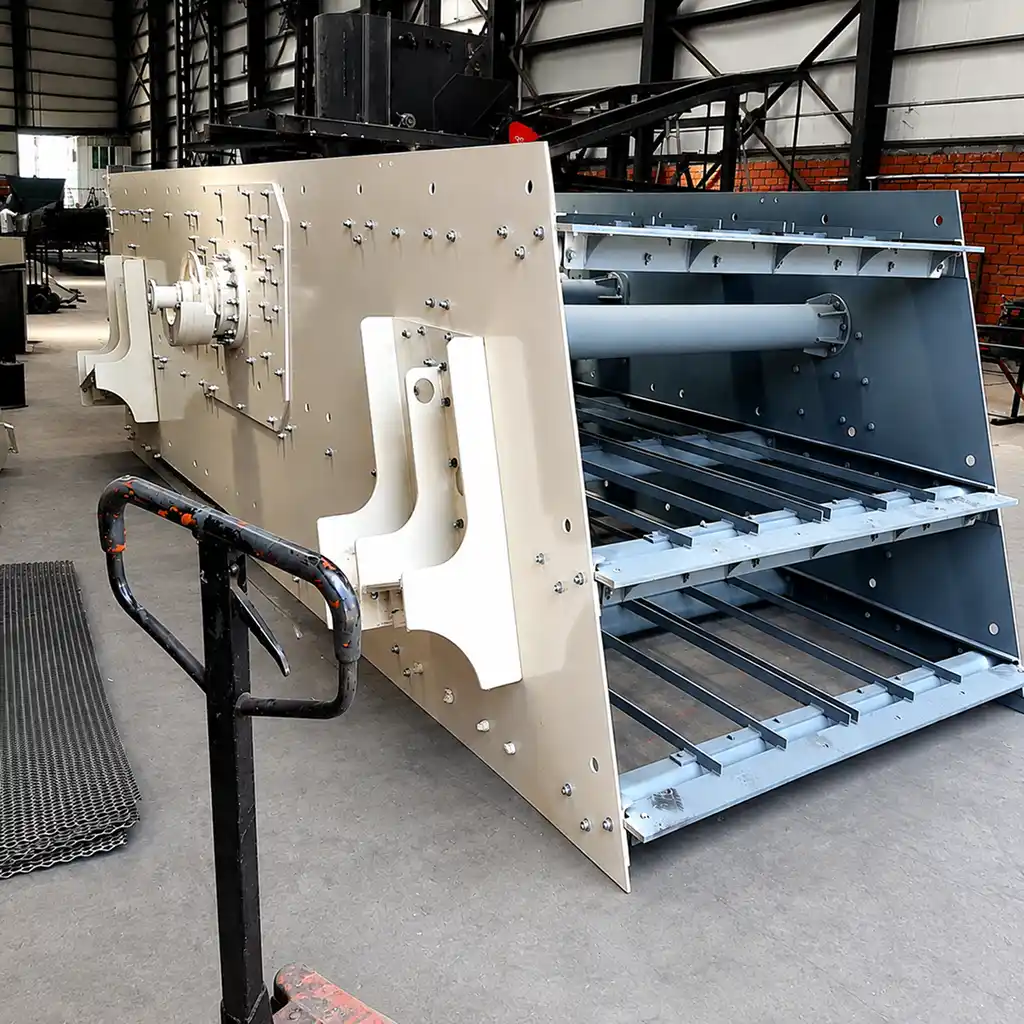
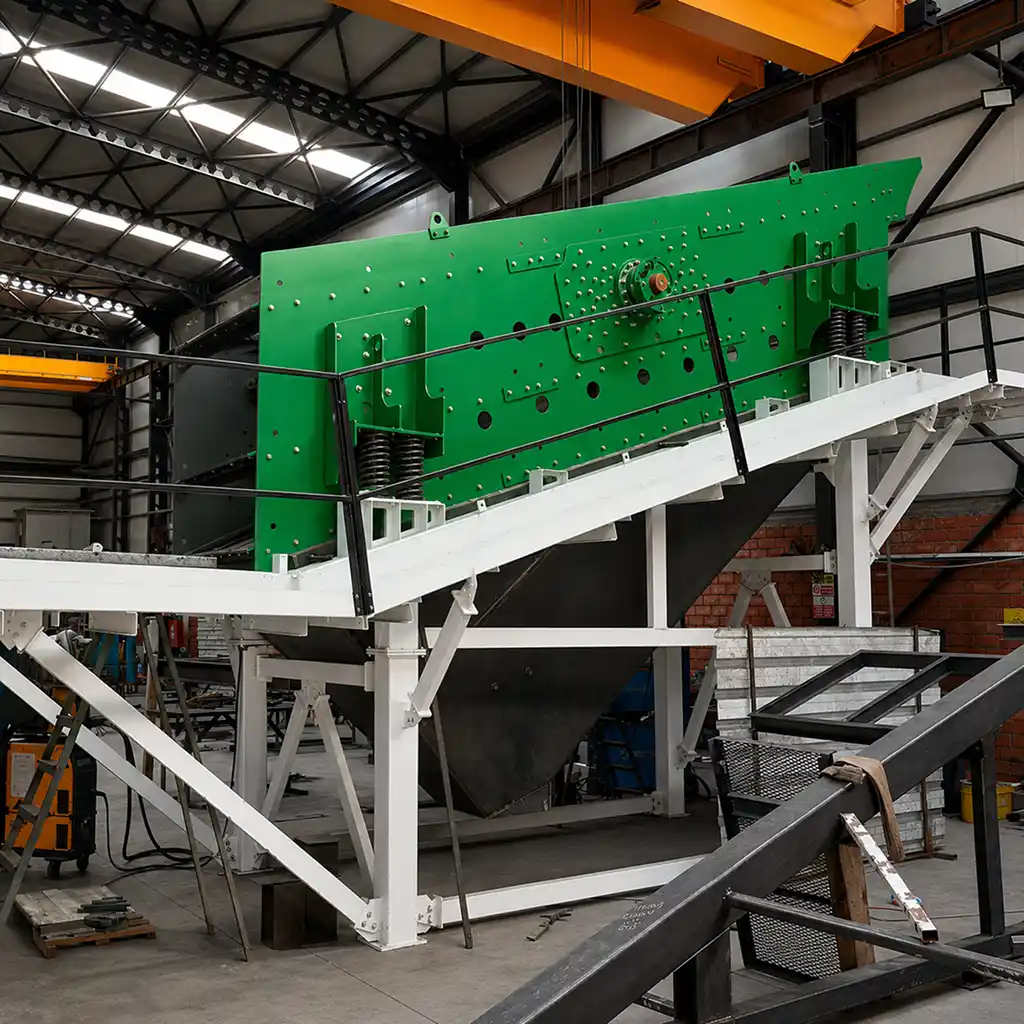
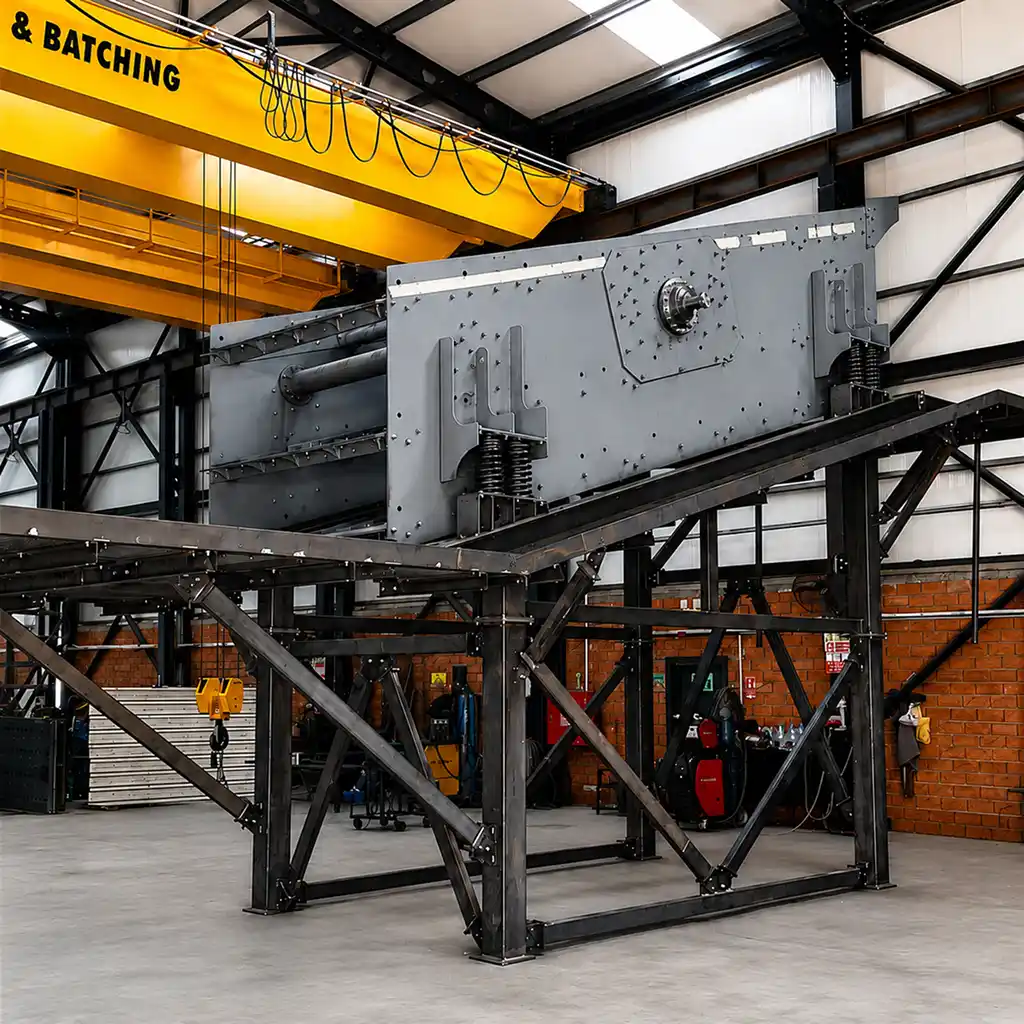
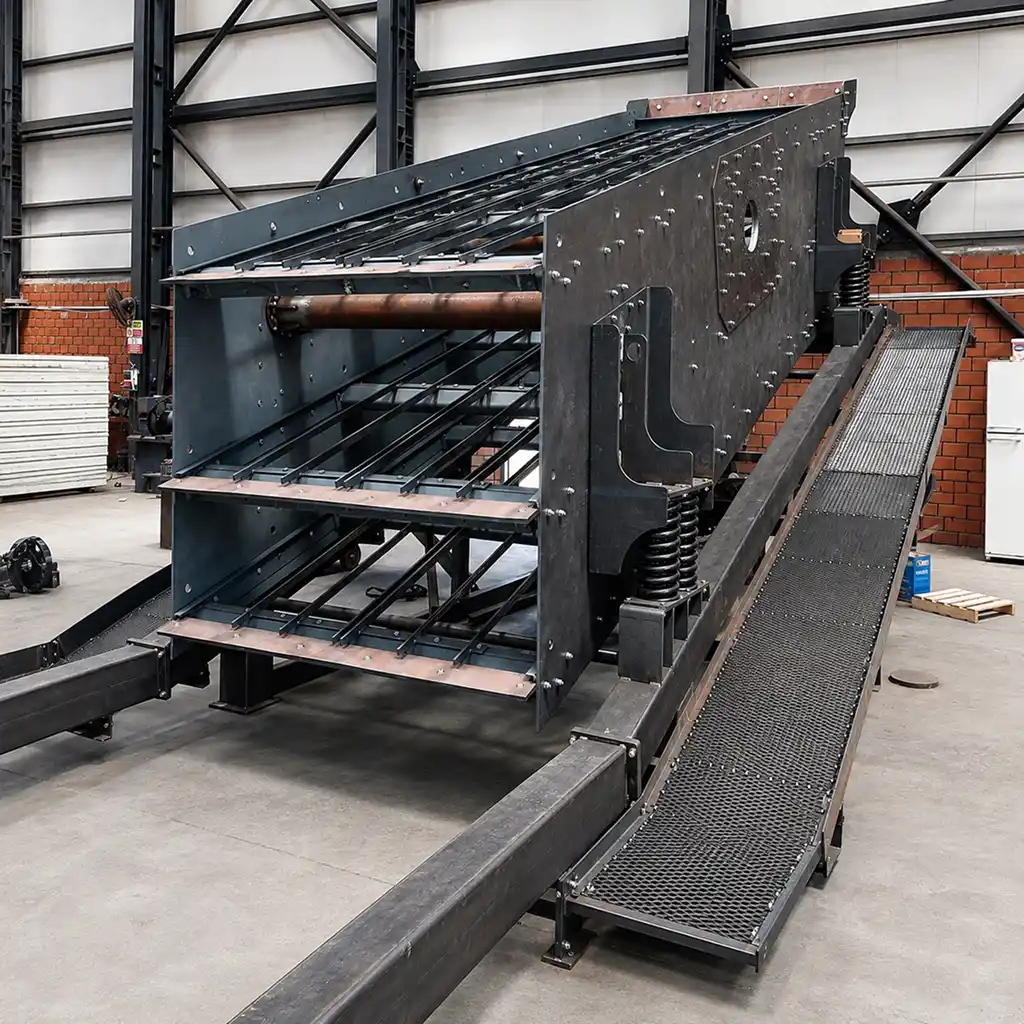
The inclined screen is the most commonly used classification equipment in crushing and screening processes; it is mounted at an angle on a robust, high-strength chassis and performs vibrating motion on springs capable of absorbing the specified load. Inclined screens are generally manufactured with 2, 3 or 4 decks. Each deck features screen boxes with a herringbone geometry, which support the screen panels.The operating principle of inclined screens can be summarised as follows: if the material is small enough to pass through the mesh size of the current deck, it passes to the deck below; if not, it is directed from the end of the deck into the front chute. A chute at the discharge point of the screen conveys the oversize material from each tier to the next process without mixing the material from different tiers. As inclined screens are very commonly used in crushing and screening processes, they are also referred to as the ‘standard type’ in the industry.Standard-type vibrating screens and horizontal vibrating screens are pieces of equipment used in the classification stage, which is the final process in a crushing and screening plant. The separation of crushed materials according to their size and their dispatch to different storage areas is carried out directly via this equipment.Common Screen Mounting Angle
The mounting angle for vibrating screens, which are widely used in the industry, is generally between 15° and 30°. In contrast, horizontal screens are mounted parallel to the ground or at a slight angle of 0–5°. Whilst the stroke of inclined screens generally varies between 8 and 12 mm, that of horizontal screens ranges from 14 to 20 mm; they also have a higher stroke and G-force compared to other screen types.It might be thought that an increase in capacity could be achieved by fitting screen wire with a larger mesh size than the desired one, rather than increasing the angle of inclination; however, this approach should be carefully evaluated as it increases the risk of material larger than the desired size being mixed into the final product.Structural Characteristics of Standard Vibrating Screens
Standard vibrating screens can be manufactured with up to four decks, depending on the number of final products required by the customer. These screens are powered by their own electric motor; their main bodies contain a shaft mounted on special bearings, which carries two counterweights. The vibrating motion that enables the material to be screened is circular and fluid; this motion is achieved by the motor rotating the eccentric weights. As the screen body is displaced from its centre of gravity to produce this circular motion, these screens are also known in the industry as ‘Circular Vibrating Screens’.The Importance of the Distance Between Floors
One of the most important design parameters in a screen is the distance between the decks. This distance must be wide enough to facilitate maintenance operations carried out on the screen and its components—particularly the screen wires. For this reason, in standard vibrating screens, the wire tensioning system is specifically designed to facilitate and speed up the replacement of the steel frames (screen panels). The discharge chute is also positioned so that it can be moved along a rail, further facilitating the replacement of the frames.The Principle of Stratification
The agitation of the material on the screen wires through vibration triggers a phenomenon known as stratification: particles close in size to the mesh aperture settle at the bottom of the material pile, whilst larger particles are positioned at the top of the pile. Consequently, whilst material smaller than the mesh aperture passes through to the underside, continuing the screening process, the larger material remaining on the screen is directed to the next stage of the process. The higher the efficiency of stratification, the sharper and more accurate the separation between the undersize and oversize fractions.Key Technical Specifications of Standard Vibrating Screens
The essential technical features that a high-quality standard vibrating screen should possess are listed below. These features are important criteria that can be used as a reference when comparing screens:- Weld-free, fully bolted body and drive system – Compared to welded structures, it reduces stress build-up and makes it easier to replace parts in the event of a fault.
- SKF/FAG bearings suitable for heavy-duty applications involving liquid lubrication and vibration – It ensures a long service life and reliability under high-frequency vibration conditions.
- Special oil ventilation system that prevents blockages – It prevents pressure imbalances within the bearing.
- High-strength eccentric shaft manufactured from ASTM 4140 quenched and tempered steel – A shaft material capable of withstanding continuous cyclic loads and offering a high fatigue life.
- One-piece Class A body panels – It enhances structural integrity and reduces the risk of vibration-induced cracking.
- Heavy-duty screen boxes with enhanced strength – It has a high capacity and is resistant to applications involving abrasive materials.
- A wire mesh tensioning system that prevents slackening and heavy-duty specialised tensioning bolts – It prevents fasteners from coming loose under constant vibration.
- A wheeled, movable front-trough system that makes it easier to replace and maintain the wire mesh – It reduces plant downtime costs by shortening maintenance intervals.
- A stone-bedding system that extends the service life of front gutters – It delays wear by reducing direct contact between the abrasive material and the metal surface.
- Rotating chute chutes that make installation easier – It offers flexible installation options depending on site conditions.
- Screen frame and support legs manufactured from high-strength steel sections – It safely transfers the dynamic loads borne by the sieve body to the ground.
- Anti-slip, high-strength galvanised chassis platform gratings, wide enough to walk on comfortably – It facilitates operator safety and maintenance access.
- Optional screen covering system and optional screen washing systems – It may be used to prevent dust build-up or to clean damp or clayey materials.
- An adjustable eccentric weight system for increasing or decreasing the impact force – It enables the vibration intensity to be optimised according to different material properties.
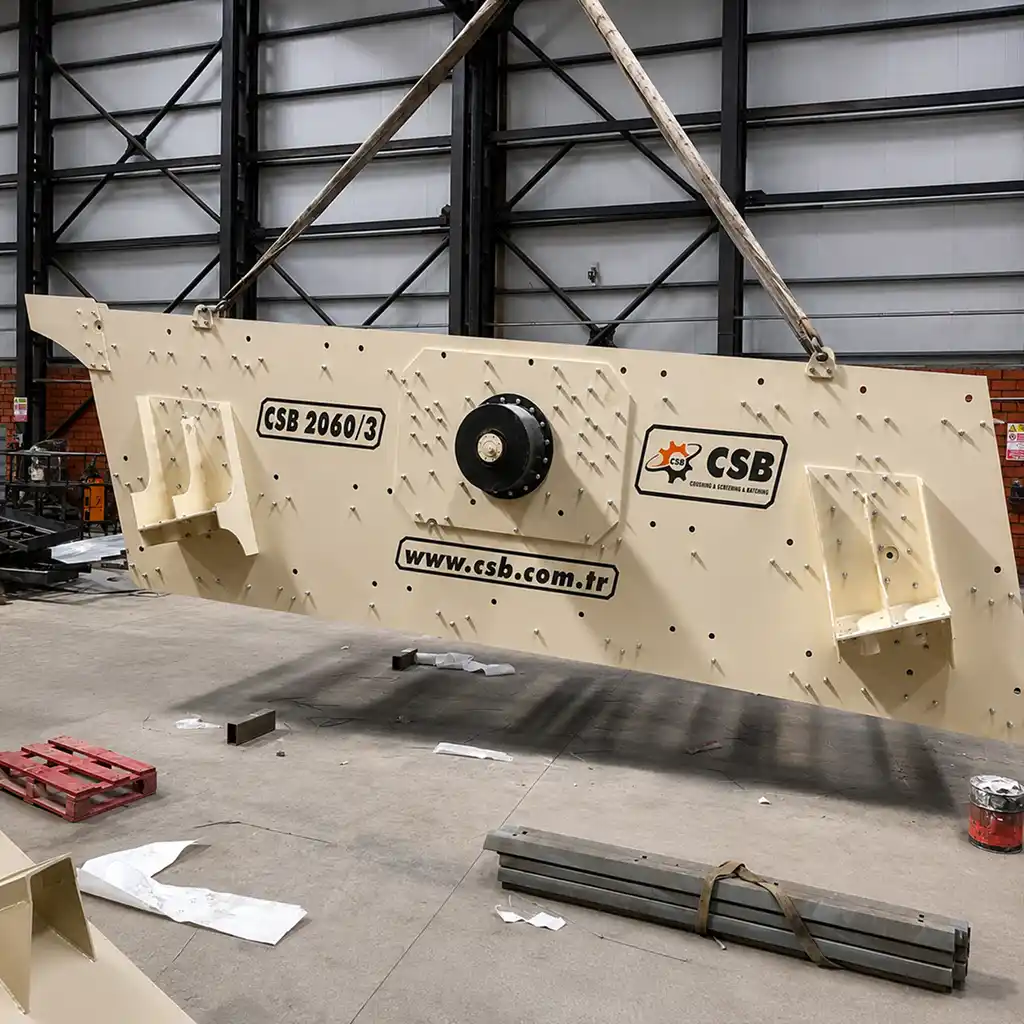
Standard Vibrating Screen Components
1. Sieve Body (Frame)
It is the main structural component that supports all the components in the vibrating screen. It is manufactured from high-strength steel sections and, together with the support legs, safely transfers the dynamic loads borne by the screen body to the floor or the plant’s steel structure.2. Eccentric Shaft and Weights
The shaft, which is mounted on special bearings within the sieve body and contains two opposing eccentric weights, is the source of the vibrating motion. Usually manufactured from ASTM 4140 quenched and tempered steel, this shaft provides high fatigue strength against continuous cyclic loads.3. Screen Boxes and Panels
Each deck consists of a screen frame that supports the screen panel, which is in direct contact with the material. In inclined screens, these frames have a ‘herringbone’ geometry. Screen panels are manufactured in various sizes depending on the mesh size and are selected according to the required product size.4. Screen Wire and Tensioning System
The screen wire is the main component with which the material comes into direct contact and which enables size separation. A special tensioning system that prevents slackening, together with heavy-duty tensioning bolts, ensures that the screen wire remains taut under constant vibration. The wire tensioning system is also designed to facilitate the replacement of the screen wire.5. Bearings and Lubrication System
SKF/FAG bearings, designed for heavy-duty applications involving liquid lubrication and vibration, are among the most critical components of the screen drive system. A special oil ventilation system that prevents blockages maintains pressure balance within the bearing, thereby extending its service life.6. Spring System
The screen body is mounted on coil springs or rubber mounts to limit the transmission of vibrational motion to the chassis and the ground. These springs dampen the specified load, allowing the screen body to vibrate freely.7. Front Gutter and Drainage System
The wheeled, movable front-trough system facilitates the replacement of screen wires and general maintenance. The discharge trough is designed to move along a rail in order to speed up the replacement of the screens (screen panels). A stone-lining system can be used to extend the service life of the front chutes; this system delays wear by reducing direct contact between the abrasive material and the metal surface.8. Optional Systems
- Mesh covering system: It may be chosen to prevent dust build-up.
- Sieve washing system (sprinkler): It prevents dust formation by spraying water onto the material being screened; it can also be used to remove mud or clay from the material entering the sieve.
- Pieced linings and trouser system in the material discharge chutes: It prevents wear by moving the material across its surface and is designed to be easily replaceable.
Criteria to Consider When Selecting a Vibrating Screen
Choosing the right vibrating screen has a direct impact on the plant’s final product quality and operational efficiency. The key criteria to be considered when selecting a screen are as follows:- Aperture: The mesh size of the wire mesh is determined according to the required final product dimensions.
- Angle of inclination: For standard inclined screens, an angle of between 15° and 30° is generally preferred; for horizontal screens, this angle may be as low as 0–5°.
- Vibration frequency and stroke value: It should be optimised according to the material’s flow properties and the efficiency of stratification.
- Number of layers: Depending on the number of finished products, a multiplier of between 1 and 4 can be selected.
- Moisture content of the material: The option of a washing system should be considered for materials with high moisture content or clayey materials.
- Capacity requirements: Hourly processing capacity is directly related to the width and length of the screen.
- Abrasiveness of the material: It influences the choice of wear-resistant lining and panel materials.
- Requirement for fixed or mobile facilities: The screen configuration may vary depending on site conditions.
Points to Bear in Mind When Maintaining a Vibrating Screen
Regular maintenance is essential to ensure that vibrating screens operate reliably and efficiently over the long term:- Ensure that the lubrication intervals for bearings are followed in accordance with the manufacturer’s recommendations.
- Regular checks of the wire tension and adjustment of the tensioning system should be carried out whenever slack is detected.
- Periodic inspection of springs or rubber buffers for signs of wear.
- Timely replacement of worn-out linings, panels and trouser systems.
- Ensuring that the eccentric weight settings are adjusted to provide the correct stroke and frequency values in accordance with the material properties.
- Regular safety inspections of the chassis platform gratings and galvanised walkways.
Applications of Vibrating Screens
Vibrating screens have a wide range of applications across various sectors:- Aggregate production: In the size classification of concrete and asphalt aggregates.
- Mining: In the classification of materials during ore preparation and beneficiation processes.
- Sand and gravel plants: In sand washing and screening lines.
- Recycling of construction and demolition waste: In the quality control of recycled aggregate.
- Chemical and food industries: For the classification of materials with different particle sizes (rotary vibrating screen types).
- Mobile screening stations: In mining and quarrying projects that require frequent changes of site.
Conclusion
Vibrating screens are pieces of equipment that play a critical role in the classification stage of crushing and screening plants, directly determining the quality of the plant’s final product. Standard (inclined) vibrating screens have become the most widely preferred screen configuration in the industry, thanks to their bolted frame construction (without welding), heavy-duty bearings, high-strength eccentric shaft, durable screen boxes, and wire tensioning and pre-groove systems that facilitate easy maintenance.Selecting the correct screen requires the joint assessment of numerous parameters, such as mesh size, inclination angle, vibration frequency, number of layers, material moisture content and capacity requirements. For businesses planning to invest in a crushing and screening plant, prioritising technical details such as material properties, ease of maintenance and long-term operating costs – rather than focusing solely on capacity figures – when selecting a vibrating screen will be crucial for the plant’s sustainable efficiency.Frequently Asked Questions
What is the maximum number of layers a standard vibrating screen can be manufactured with?
Standard vibrating screens can be manufactured with up to four decks, depending on the number of final products required by the customer.
What is the difference between an inclined screen and a horizontal screen?
Whilst inclined screens are generally installed at an angle of 15°–30°, horizontal screens are installed parallel to the ground or with a slight incline of 0–5°. The mesh size of horizontal screens (14–20 mm) is larger than that of inclined screens (8–12 mm) and offers a higher processing capacity.
How is vibration generated in a vibrating screen?
Vibration is generated by centrifugal force, as the eccentric weights—attached to a shaft mounted within the screen body—are rotated by the motor.
What do the terms ‘under-screen’ and ‘over-screen’ material mean?
Small particles that can pass through the mesh openings of a sieve are called ‘undersize’, whilst larger particles that cannot pass through the openings and remain on the surface of the sieve are called ‘oversize’.
Which parts are replaced most frequently during the maintenance of a vibrating screen?
Screen wires, bearings, springs and wear-prone liner/panel systems are the components in vibrating screens that most frequently require maintenance and replacement. The wheeled pre-trough and rail systems enable these replacements to be carried out quickly.