


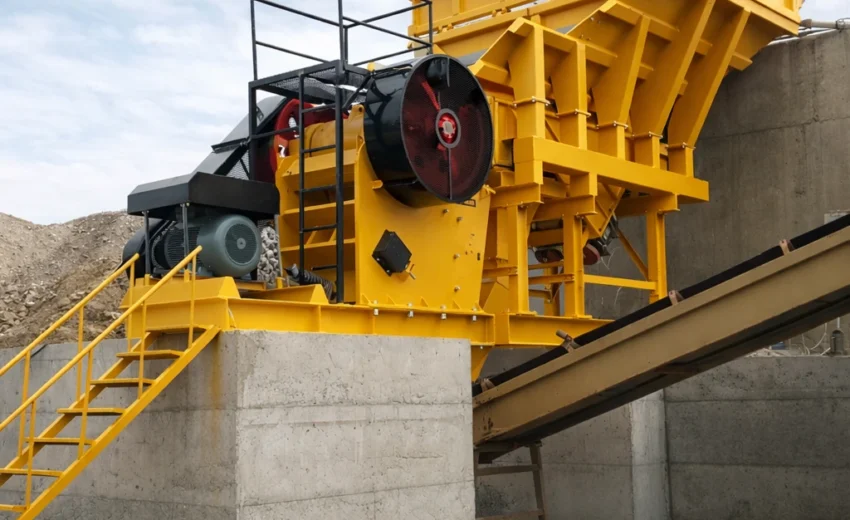
Introduction: The Importance of Jaw Crushers in the Mining and Aggregates Sector
In many sectors, such as mining, the production of chemical construction materials and the aggregates industry, it is essential to reduce raw materials to suitable sizes in order to make them usable. The jaw crusher, which lies at the heart of crushing and screening plants, is one of the most critical and widely used pieces of equipment in this size-reduction process. When processing hard and highly abrasive rocks such as granite, basalt, limestone and quartz, jaw crushers form the very backbone of crushing plants.In this comprehensive guide, we will examine what a jaw crusher is, its operating principle, design types, main components, methods for calculating capacity and power, the criteria to consider when selecting a crusher, and its sector-specific applications from an engineering perspective. Our aim is to provide accurate, reliable and practical information for both professionals new to the sector and businesses planning to invest in crushing and screening plants.What is a Jaw Crusher?
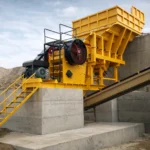
A jaw crusher is a heavy-duty crushing machine used in crushing plants to reduce large stones and rock blocks to the desired size by compressing them between two jaw plates, one of which is fixed and the other movable. The feed material is crushed by being subjected to compressive force within the narrowing gap between the fixed and moving jaws, and is discharged through the crusher’s lower discharge opening under the influence of gravity.Jaw crushers can be designed in either a mobile (tracked or wheeled) or fixed plant configuration. Typically used in primary and secondary crushing stages within crushing and screening plants, these machines possess the power to easily process even stones with high Mohs hardness and high abrasiveness, such as marble, granite and basalt.Crushing plants are large-scale production facilities that break down large stones and rocks into aggregate, the fundamental raw material of the construction sector. The aggregate required for ready-mix concrete production, road construction, infrastructure projects and the construction sector as a whole can only be obtained through these plants. For this reason, the jaw crusher is a strategic piece of equipment at the very start of the construction materials supply chain.The Basic Function of a Jaw Crusher
The primary function of a jaw crusher is to break down large, unprocessed stones into smaller pieces using the compressive and shearing forces applied by the jaws after the stones have been fed into the crushing chamber. Although various types of crushers have been developed today, the main reason for this is that materials with different hardnesses and physical properties can only be crushed efficiently using different mechanisms. Jaw crushers are particularly favoured for crushing rocks with a high hardness; however, they can also be used successfully for processing ores of lower hardness.Criteria to Consider When Selecting a Crusher
Selecting the correct type and model of crusher is a decisive factor in terms of the plant’s efficiency, operating costs and product quality. The key criteria to be taken into account when selecting a crusher are as follows:
- Hardness value of the material – The Mohs hardness of the rock to be crushed directly influences the choice of crusher jaw material.
- Fracture resistance – The compressive strength of the material determines the required compressive force.
- Density of the material – Bulk density and specific gravity play a critical role in capacity calculations.
- Moisture content – High humidity levels can increase the risk of blockages.
- Crushing capacity requirement – Hourly, daily or annual production targets.
- Dimensions of the feedstock – If possible, measures of statistical distribution and percentages.
- Target product dimensions – The size distribution of the desired end product.
- Morphological characteristics – Product quality criteria such as flatness, cubicity and contamination.
- Special properties of the material – Properties such as flammability, explosiveness, corrosiveness, adhesiveness, elasticity and brittleness.
Each of these criteria requires expert engineering assessment when selecting the type and model of crusher. An incorrect choice can lead to both capacity losses and premature wear and downtime.
Crushing Stages: Primary, Secondary, Tertiary and Micronisation
In the mining, construction and building materials sectors, the process of reducing the size of materials is generally carried out in several stages. These stages can be listed as follows:1. Coarse Crushing (Primary Crushing)
During the primary crushing stage, materials are reduced to a size range of 125–250 mm. In systems where jaw crushers are typically used in the first stage, the maximum size of the feed material can be as large as 1,000 mm. This stage is the first step in reducing the large rock blocks obtained from the quarry following blasting to a workable size.2. Secondary Crushing
Materials passing through the secondary crushing process are reduced to a size range of 0–50 mm. The maximum size of materials to be fed into this stage is taken as 250–500 mm. The return loads in the jaw crushers used in secondary crushing must be planned very carefully; otherwise, crusher performance will fall short of expected levels.3. Tertiary (Fine) Crushing
During the tertiary crushing stage, the material is reduced to a size of 0–25 mm. The maximum size that crushers in this category can handle is generally accepted as 25–150 mm.4. Micronised Crushing
During the micronisation crushing stage, materials are reduced to sizes ranging from 0 to 1,000 microns. The feed size can be considered to be a maximum of 25 mm, although this depends on the crusher design.The type of crusher to be used at each stage must be determined by specialist staff based on the material properties and the target product sizes.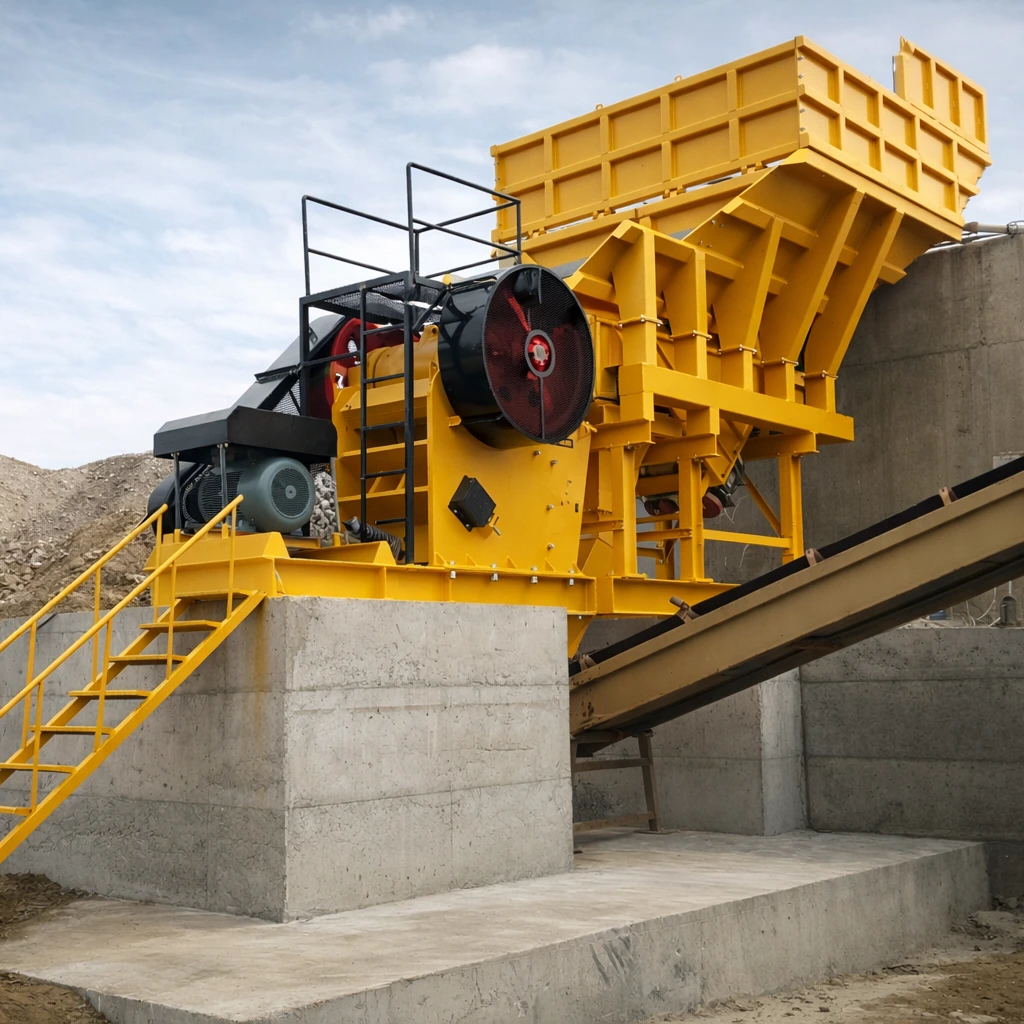
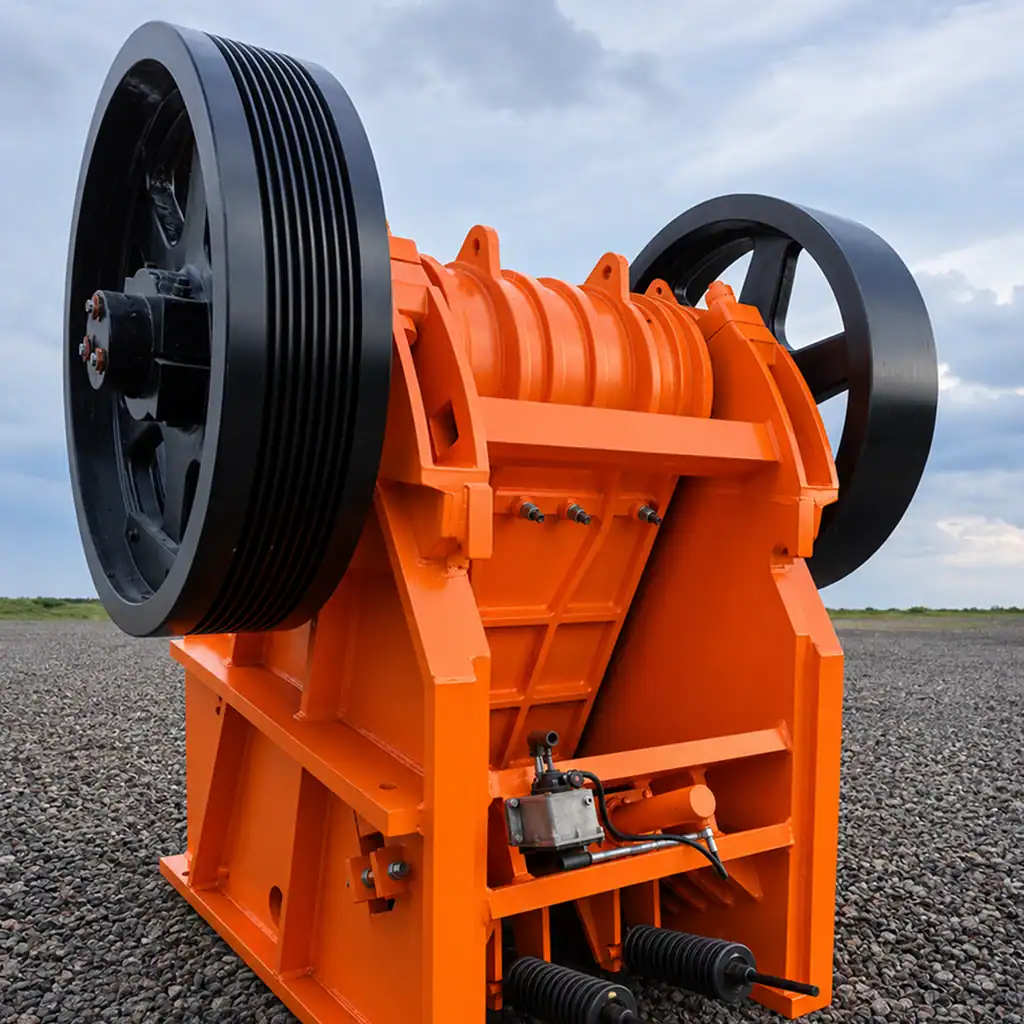
The Operating Principle of a Jaw Crusher
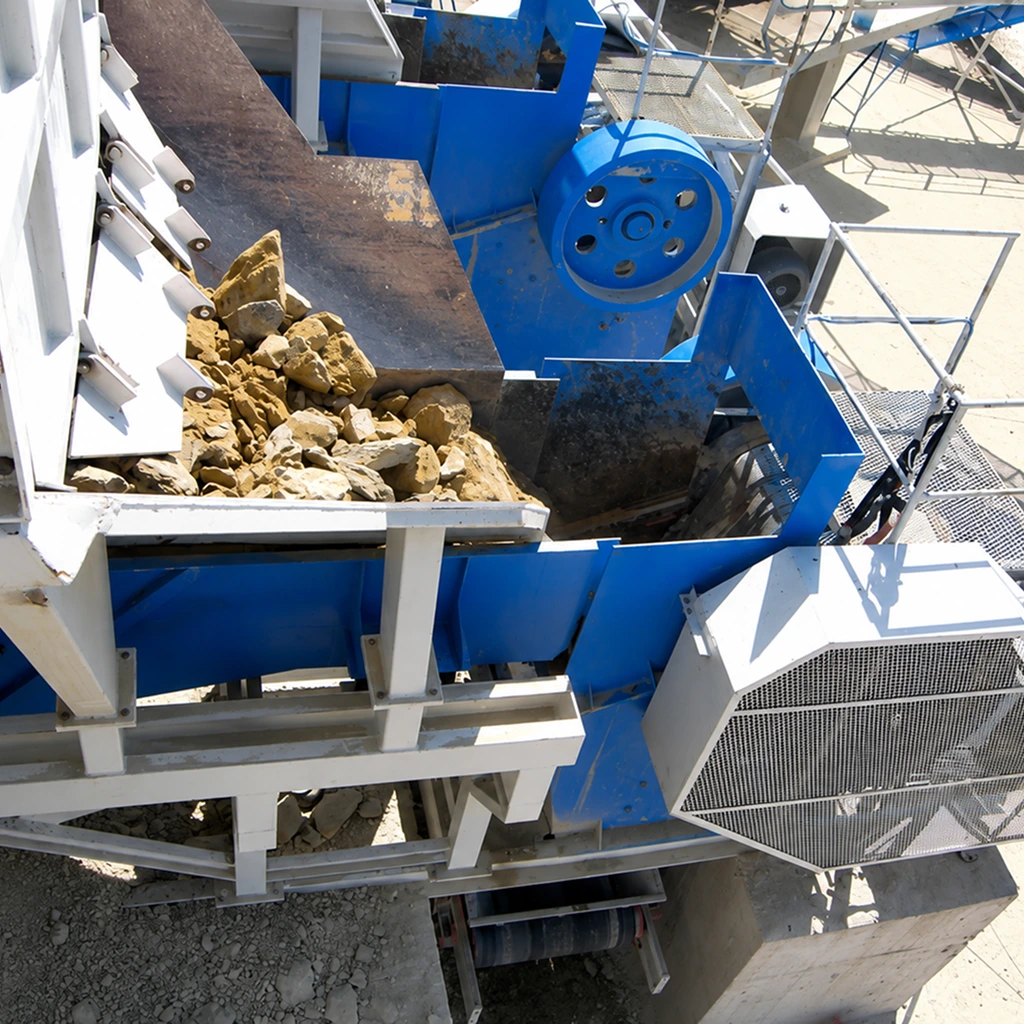
A single-jaw crusher, in its simplest form, consists of two crushing jaw surfaces positioned vertically on the main support frame. Whilst one of these jaws remains stationary, the other moves along a specific orbit around a central pivot. Large materials fed into the crusher are crushed by the compressive force between these two jaws and discharged from the bottom of the crusher due to the combined effect of the moving jaw and gravity.As the discharge zone of the crusher is designed to be narrower than the feed zone, the material is progressively reduced in size as it passes through the crusher. The crushing efficiency of jaw crushers is generally assessed according to this reduction in size (reduction ratio). Although this varies from design to design, a reduction ratio of between 3 and 7 times is generally accepted.Types of Jaw Crushers
Jaw crushers are classified into three main design categories based on the position of the centre of rotation.
A. Jaw Crushers with the Centre of Rotation at the Bottom (Dodge Type)
In crushers of this type, the centre of movement is located at the lower part of the main body structure. The moving jaw achieves its maximum movement on the feed side of the crusher; consequently, whilst the dimensions of the feed zone vary within a certain range, the discharge opening remains fixed and cannot be adjusted.
Features of Dodge-type crushers:
- Crushing yields are high.
- Their capacities are too low to meet today’s industrial needs.
- The requirement for the feed material to be of the same dimensions as the outlet creates a risk of frequent blockages.
- It has not found widespread industrial application; it is generally preferred for small-scale laboratory or sample preparation applications.
B. Jaw Crushers with a Central Pivot (Universal Type)
In these crushers, the centre of movement is in the middle, and the crushing action of the moving jaw varies on both the feed and discharge sides. They are no longer used in industrial applications today.
C. Jaw Crushers with the Centre of Movement at the Top (Blake Type)
Blake tipi çeneli kırıcılar, ilk olarak Eli Blake tarafından 19. yüzyılın ikinci yarısında yol yapımında kullanılacak malzemeleri üretmek amacıyla icat edilmiştir. Başlangıçta düşük kapasiteli olan bu kırıcılar, zamanla gövde büyütme çalışmalarıyla birlikte günümüzde 1000 ton/saate kadar çıkan kapasitelerle ve 0-300 mm ürün alınabilecek şekilde üretilebilmektedir.
Mevcut bir çeneli kırıcının alt çıkış aralığı arttıkça kapasitesi doğrusal olarak artar. Alt çıkış aralığı, her bir devirde kırıcı tasarımına bağlı olarak minimum (CSS) ve maksimum (OSS) değerler arasında hareket eder. Bu aralık değerine “Throw” (Hareket Miktarı) adı verilir.
- Minimum Jaw Clearance (CSS – Closed Side Setting): in mm
- Maximum Jaw Opening (OSS – Open Side Setting): in mm
Sub-categories of Blake-Type Crushers
1. Double-guarded jaw crushers
These are heavy-duty crushers designed with dual safety plates to further increase crushing force, with the centre of rotation again positioned at the top. They are suitable for crushing rocks with high fracture resistance, abrasiveness and hardness (Mohs hardness > 7).
2. Single-safety-plate jaw crushers
As the name suggests, these are jaw crushers that utilise a single safety plate in their design. As the centre of movement is positioned higher up, the movement of the Pitman (moving jaw) assembly increases as it moves downwards, reaching its maximum value at the lowest point.
The advantages of this design:
- Thanks to gravity and the swishing motion, the risk of blockages is very low.
- It is better suited to high-capacity production.
- It requires little maintenance and is easy to look after.
Owing to these advantages, single-safety-plate jaw crushers have become the most widely manufactured and used type of jaw crusher worldwide.
Main Components of a Jaw Crusher
The long service life and efficient operation of a jaw crusher depend on each component being correctly designed and manufactured from the appropriate materials.
1. Moving Jaw (Pitman) Group
This is the drive system that carries out the crushing process in jaw crushers. It consists of a pitman, a moving jaw plate, compression wedges, bearings and an eccentric shaft.
Movable Jaw (Pitman): This component is manufactured from a single piece of cast steel and features a replaceable crusher jaw. Using the power it receives from the motor via the flywheel and shaft, it follows a complex trajectory to compress the material between its own body and the fixed jaw. It is manufactured from high-strength steel and can be produced as a single piece weighing between 1 and 15 tonnes, depending on the size of the crusher. The tapering of the cross-section as it moves away from the centre of the eccentric shaft is preferred to facilitate movement.
Camshaft: It transmits the rotational motion received from the flywheel to the moving jaw. It is mounted on the Pitman arm via two self-aligning roller bearings and on the main crusher body via two self-aligning roller bearings. High-strength steel (DIN-17200 / AISI 4140 / C4140) is generally preferred as the shaft material. Eccentricity values are generally selected within the range of 10–30 mm; as eccentricity increases, the movement of the Pitman assembly increases, but the crusher’s power requirement also rises in parallel.
Self-aligning Roller Bearings: A total of four double-row self-aligning roller bearings, in two different sizes, are used in the drive system. The bearings used for the pitman are larger in diameter.
Mazes: These are stationary or rotating sealing components used to ensure the long-term operation of bearings and to assist with the lubrication process.
2. Fixed Jaw (Apron) Group
It is one of the main components, mounted on the main crusher body either by welding or bolting, and positioned perpendicular or at an angle opposite the moving jaw assembly. It carries the replaceable fixed jaw plate and, together with the moving jaw, is responsible for compressing the material. It is usually made of cast steel and is designed to withstand high crushing forces.
3. Flywheels
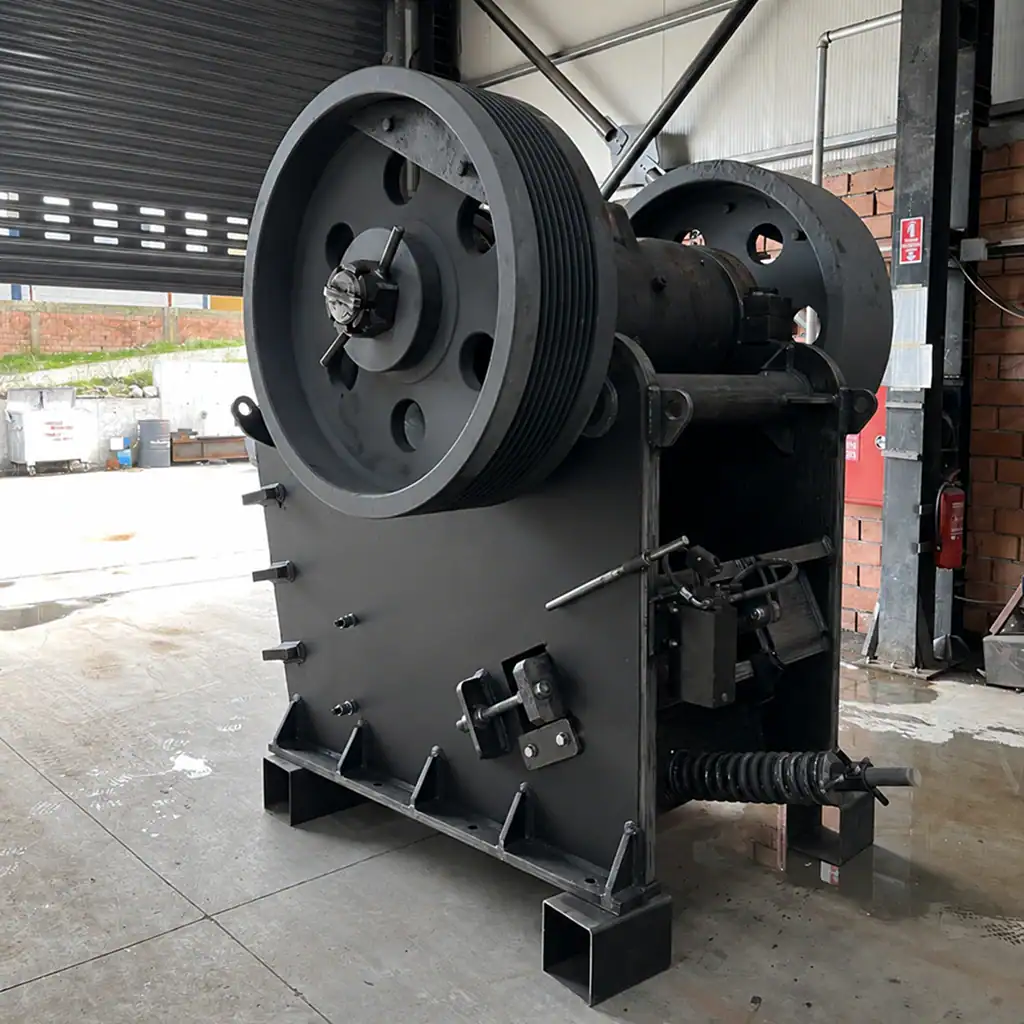
There are two flywheels at the ends of the eccentric shaft. One is flat and the other is grooved (both can be made grooved if required). The flywheels have two main functions:
- Sabit hız ve sabit tork üreten elektrik motorunu dengelemek: Çeneli kırıcılar, çalışma döngüsünün yarı zamanında malzemeye baskı uygularken maksimum güce ihtiyaç duyar; geri çekilme sırasında ise güç ihtiyacı minimuma iner. Volan bu değişkenliği kinetik enerji olarak depolayarak dengeler.
- Enerji depolamak ve gerektiğinde geri vermek: Volandaki enerji ihtiyaç duyulduğunda kullanıldıkça dönüş hızı yavaşlar, enerji depolandıkça artar.
The kinetic energy stored in flywheels is calculated using the following formula:
Ek = ½ . I . ω² ; I = m . k²
I: Moment of inertia of the flywheel (kg·m²)
ω: Angular velocity (rad/s) = π.n/30
m: Weight of the flywheel (kg)
k: Radius of gyration (m)
4. Jaw Clearance Adjustment System
This system, also known as the adjustment block, enables the adjustment of the crusher’s discharge gap. A safety plate is situated between the adjustment block and the moving jaw assembly. In large crushers, hydraulic pistons are required to carry out the adjustment. Once the discharge gap has been set, adjustment plates, a mechanical wedge system or fully hydraulic systems may be used.
The safety plate is one of the crusher’s most critical safety components. It forms one of the mechanism’s arms and, should an uncrushable object enter the crusher, acts as the weakest link by breaking to prevent the machine from sustaining major damage.
5. Moving Jaw (Pitman) Group Tensioning System
During operation, a certain amount of force must be applied in the reverse direction to prevent the moving jaw assembly from becoming detached from the mechanism. In modern jaw crushers, either one or two spring-loaded tensioning mechanisms or hydraulic piston systems are used, depending on the size of the crusher.
6. Main Crusher Housing
It is a steel structure that holds all the components together. It consists of two main plates, the thickness of which varies according to the size of the crusher, and supporting components. The main body, together with the fixed jaw assembly and the moving jaw assembly, forms the crusher’s crushing chamber; it is supported by replaceable side liner plates made from cast iron or wear-resistant sheet metal. The jaws and side liners that come into contact with the material are generally made from cast steel containing 16–18 per cent manganese and 1.5 per cent molybdenum.
Applications of the Jaw Crusher
Jaw crushers have a wide range of applications across various sectors:- Aggregate production: As primary crushing equipment in the production of concrete and asphalt aggregates.
- Mining: During the primary size-reduction stage at ore processing plants.
- Road and infrastructure projects: In the production of road fill material and ballast.
- Recycling of construction waste: In the conversion of concrete, brick and demolition waste into reusable aggregate.
- Mobile crushing plants: Portable jaw crusher units are the preferred choice for projects that require frequent changes of site.
Points to Bear in Mind When Maintaining a Jaw Crusher
Regular maintenance is essential for the long-term, efficient operation of a jaw crusher:- Periodic lubrication and inspection of bearing and labyrinth systems.
- Monitoring the wear on the jaw plates and rotating them when necessary.
- Regular inspection of the condition of the number plate.
- Ensuring that the tensioning system (spring-loaded or hydraulic) is maintained at the correct tension.
- Checking the adjustment block and output range in accordance with the manufacturer’s recommendations.
- Do not exceed the maximum operating speed; if a change in speed is required, always consult the manufacturer.
Conclusion
The jaw crusher is a critical piece of equipment in the mining and aggregates sectors, enabling raw materials to be reduced to processable sizes, and it boasts a highly sophisticated design history from an engineering perspective. Blake-type single-guard jaw crushers are currently the most widely used type of jaw crusher worldwide, thanks to their high capacity, low risk of blockages and ease of maintenance.Selecting the correct crusher requires the joint assessment of numerous parameters, such as the material’s hardness, strength, density, moisture content, capacity requirements and the desired product characteristics. Whilst formulas such as Taggart, Lewenson, Broman and Rose & English, used in capacity and motor power calculations, provide a theoretical framework, the final decision must always be supported by practical data obtained from the site and confirmed by specialist engineering consultancy.For businesses planning to invest in a crushing and screening plant, prioritising technical details—such as the jaw angle, reduction ratio, jaw profile type and material wear characteristics—rather than focusing solely on capacity figures when selecting a jaw crusher will be decisive in terms of both long-term efficiency and operating costs.Frequently Asked Questions
What is the difference between a jaw crusher and a cone crusher?
Whilst a jaw crusher operates on the principle of compression between two flat jaw plates—one fixed and one moving—a cone crusher operates on the principle of a rotating eccentric mantle compressing the material against a fixed concave liner. Jaw crushers are generally preferred for primary crushing, whilst cone crushers are preferred for secondary or tertiary crushing.
What materials can a jaw crusher crush?
It can be used on a wide range of materials, from hard and abrasive rocks such as granite, basalt and quartz to softer materials such as limestone and dolomite.
Why is the jaw angle of a jaw crusher important?
The grip angle determines the material’s ability to be held between the jaws and broken. At angles exceeding 27°, gripping the material becomes more difficult and capacity decreases.
What affects the service life of the jaws in a jaw crusher?
The abrasiveness of the material, the manganese alloy content of the jaw material and the operating conditions directly affect the service life of the jaws. Whilst wear on materials such as limestone is 25–50 g/tonne, this rate can rise to as much as 500 g/tonne for highly abrasive materials.
Should one opt for a mobile jaw crusher or a stationary plant?
A mobile jaw crusher is more suitable for medium-scale projects that require frequent changes of site and where flexibility is a priority; whereas a fixed plant configuration is more suitable for long-term, high-volume projects requiring continuous production.