


Introduction: The First Stage of the Crushing Plant — Vibrating Grizzly Feeder
The efficiency of a crushing and screening plant (crushing plant) is directly related not only to the power of the crushers, but also to how evenly and consistently the material is fed into them. This is where the virating grizzly feeder comes into play. As the first point of contact for raw material extracted from the quarry, this equipment plays a critical ‘traffic control’ role that determines the plant’s overall performance.A virating grizzly feeder is a machine used to transfer large pieces of material from the hopper (bunker) to the primary crusher in a controlled manner. Essentially, it consists of a vibrating tray or grating deck containing a series of parallel bars or rails to separate large materials from smaller ones. The vibrations produced by the feeder help ensure a consistent and uninterrupted flow of material to the crusher, which is crucial for the efficiency of the crushing process.In this guide, we will examine, from an engineering perspective, what a virating grizzly feeder is, its operating principle, structural components, design variations, the logic behind capacity and grate spacing calculations, its strategic role within a crushing plant, and the criteria to consider when selecting the correct feeder.What is a Vibrating Grizzly Feeder?
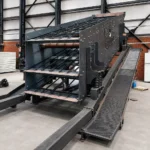
A virating grizzly feeder is a heavy-duty material feeding piece of equipment that ensures large and irregularly shaped blocks of stone from the quarry are conveyed to the primary crusher in a controlled, balanced and continuous flow. The grate bars or rails on the feeder’s body ensure that the material undergoes pre-screening according to its size before entering the crusher.This equipment does not merely perform a ‘conveying’ function in crushing and screening plants; it also serves a pre-screening role that enhances the plant’s overall efficiency. virating grizzly feeder are designed to withstand the impact and wear conditions frequently encountered in demanding industrial applications such as construction, mining and quarrying.Location of the Vibrating Grizzly Feeder within the Plant
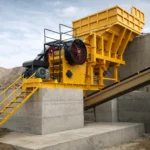
Virating grizzly feeder are usually positioned between the feed hopper and the primary crusher. Raw material is discharged into this hopper by tipping or by bucket; the feeder then directs the material into the crusher’s feed opening at a controlled rate. This prevents sudden and irregular loading of the crusher, thereby safeguarding its capacity and service life.Basic Functions of a Vibrating Grizzly Feeder
1. Pre-Screening
The primary function of a virating grizzly feeder is to screen the material fed into it. The screen bars or rails of the feeder are spaced in such a way as to allow smaller particles to pass through whilst blocking larger ones. This screening process:- Prevents fine-grained material from entering the crusher unnecessarily,
- It reduces the risk of damage to the crusher caused by impact and wear,
- It significantly increases the overall efficiency of the crushing process.
2. Vibration Mechanism
It is fitted with a vibrating eccentric shaft or vibromotor. These vibrations facilitate the movement of the material along the screen bars and help to separate particles of different sizes. The vibrating motion ensures that the material moves at a steady rate without becoming jammed on the screen surface, thereby minimising the risk of blockages.3. Customisable Settings
Many virating grizzly feeder are fitted with adjustable mechanisms to control the amplitude and frequency of the vibrations. This feature enables operators to optimise feeder performance according to the characteristics of the material being processed (moisture content, particle size distribution, stickiness, etc.) and the requirements of the crushing system. The operating frequencies of the vibrators can usually be adjusted from the control panel; this ensures that feeder performance is maximised in accordance with the material’s properties.4. Heavy-Duty Structure
Virating grizzly feeder are generally manufactured from robust, high-strength materials to withstand the impact and wear caused by the handling of large and heavy materials. They are designed to withstand the harsh conditions frequently encountered in sectors such as construction, mining and quarrying.5. Variability in Design
Virating grizzly feeder may differ in design depending on specific requirements:- Some models feature a stepped or sloping tray to further sort the material.
- Others use a flat board for simpler applications.
- The size and spacing of the grid bars can be customised according to the properties of the material being processed.
6. Security Features
The vast majority of virating grizzly feeder are fitted with safety features such as guards and covers that prevent access to moving parts. These features are designed to reduce the risk of accidents for operators and maintenance staff.
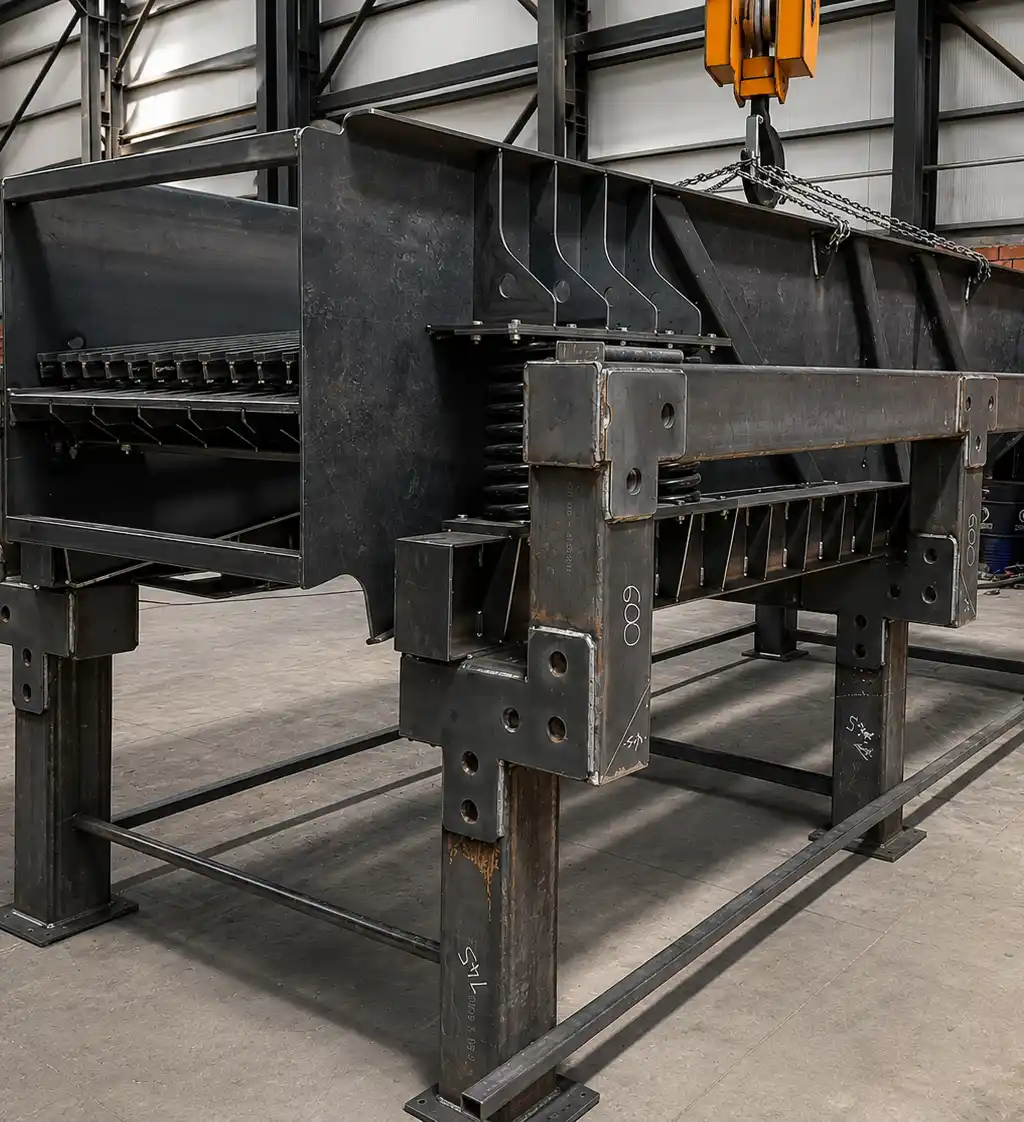
Main Components of a Vibrating Grizzly Feeder
1. Feed Bunker (Hopper)
This is the hopper section, which features a high-strength structure and into which the material is first discharged. It can be manufactured in various volumes (for example, 40 m³) depending on the required capacity and can be used in both mobile and stationary primary units.2. Vibrating Feeder Housing
It is the main conveyor structure that retrieves the material from the hopper, feeds it into the screening system and then on to the crusher. It moves the material at a steady speed by means of the vibrating motion generated by a vibrating motor or an eccentric shaft.3. Grill Bars
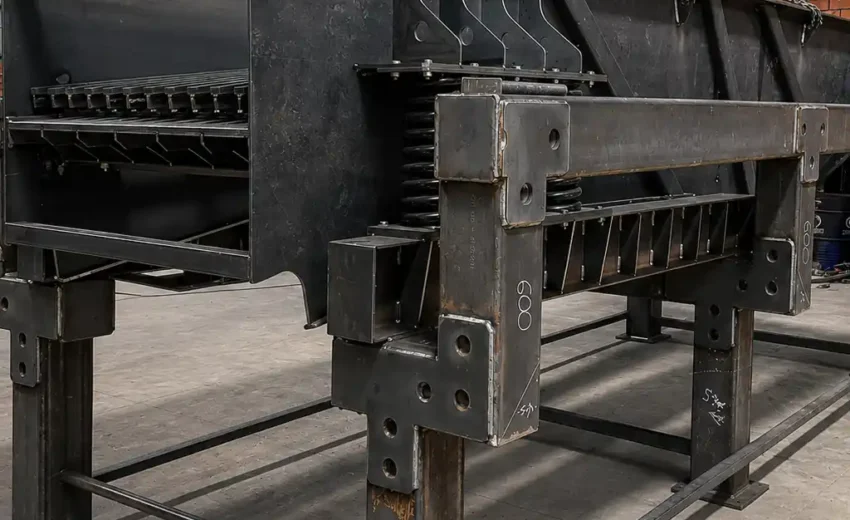
The grid bars or rails, arranged in parallel on the feeder body, perform the function of preliminary screening. These bars are usually made from high-strength or alloy steel to withstand heavy impacts and wear. Depending on the application, two basic grid bar designs are commonly used:- Grilled with Sticks: It is a simple design comprising parallel metal bars arranged at regular intervals, which is capable of withstanding heavy material impact and is resistant to blockages. The spacing between the bars can be customised according to the material properties and processing requirements; it is particularly suitable for screening coarse materials such as ore and aggregate.
- Perforated Plate Grizzly: It consists of a metal plate perforated at regular intervals and allows the material to be screened through these holes. It is better suited to screening finer particles than a bar screen; the hole sizes can be precisely customised.
4. Adjustable Grille Spacing System
Thanks to the adjustable grate spacing, the size of the product to be bypassed can be varied. This flexibility enables the plant to adapt quickly to different types of material and different end-product requirements.5. Vibromotor / Eccentric Shaft and Counterweights
This component, which forms the source of the vibrational motion, consists of two counter-rotating shafts and weights. The resultant force created by the counter-rotating shafts produces linear vibrational motion at a specific angle to the horizontal. In some designs, this angle is set at approximately 45°.6. Spring or Rubber Suspension System
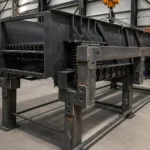
The feeder housing is mounted on metal springs or rubber mounts to limit the transmission of vibrations to the chassis and the ground. Typically, four sets of springs or rubber mounts are used to ensure that the feeder remains stable during operation.7. Wear-Resistant Liner and Side Plates
The inner surfaces of the feed tray and side plates are lined with replaceable wear-resistant liners to minimise wear caused by direct contact with coarse and abrasive material.8. Control System
The operating frequency of vibrating feeders can usually be adjusted remotely from the control cabin. This allows the feed rate and vibration intensity to be optimised according to the material properties, thereby maximising feeder performance.Criteria to Consider When Selecting a Vibrating Grizzly Feeder
The right choice of feeder is crucial in terms of the plant’s overall efficiency and operating costs. The following criteria should be assessed when making this choice:- Maximum size of the material to be fed: The feed body and hopper must be of sufficient capacity to safely carry the largest piece of material.
- The abrasiveness and hardness of the material: It directly influences the choice of wear-resistant lining and grate bar materials.
- Target hourly capacity: The feeder’s width, length and vibration parameters must be determined in accordance with this objective.
- Required spacing between grill bars: The adjustable gap should be selected according to the size of the material to be bypassed.
- Moisture content and tackiness of the material: Special screen geometries should be chosen to reduce the risk of blockages in materials with high moisture content or clayey materials.
- Requirement for mobile or fixed installations: Depending on site conditions, either a combined vibrating feeder or a separate feeder + a girzzly screen configuration should be selected.
- Type of vibration mechanism: The most suitable system for the application must be determined from among linear vibration systems with a vibromotor and circular vibration systems with an eccentric shaft.
- Ease of maintenance: The fact that the grate bars and wear parts can be easily replaced reduces long-term operating costs.
Points to Bear in Mind When Maintaining a Vibrating Grizzly Feeder
Regular maintenance procedures must be carried out to ensure that virating grizzly feeder operate reliably and efficiently over the long term:- The wear level of the grate bars should be checked periodically and they should be replaced when necessary.
- Adhere to the manufacturer’s recommendations regarding the lubrication intervals for vibromotor or eccentric shaft bearings.
- Regular inspection of the spring or rubber suspension system for signs of fatigue.
- Monitoring the wear condition of the wear-resistant linings on the feed table and side plates.
- Regular inspection of the safety guards and the integrity of the covers.
- Optimising the vibration frequency and amplitude settings to suit the properties of the material being processed.
Applications of the Vibrating Grizzly Feeder
Virating grizzly feeders have a wide range of applications across various sectors:- Mining and ore processing: The controlled feeding of large ore blocks from the pit into the primary crusher.
- Quarrying and aggregate production: In the transfer of blasted rock to a primary jaw or impact crusher.
- Mobile crushing plants: Combined screen feeder solutions for projects requiring frequent site changes and subject to space and budget constraints.
- Fixed high-capacity plants: Combinations of a separate feeder and an independent grating screen in plants with a high hourly capacity.
- Recycling of construction and demolition waste: Feeding demolition waste of mixed sizes into a crusher after it has undergone pre-screening.
- Alluvial mining: To improve the efficiency of classification and concentration processes by separating coarse material.
Conclusion
The virating grizzly feeder is one of the first and most critical components in crushing and screening plants. By ensuring that the irregular and oversized material coming from the feed hopper is conveyed to the primary crusher in a controlled, balanced and continuous flow, it directly affects the plant’s overall efficiency, crusher service life and energy consumption balance. Thanks to its pre-screening (by-pass) function, it prevents material that is already of the desired size from entering the crusher unnecessarily; this increases the crusher’s effective capacity and reduces the rate of wear.
Selecting the correct virating grizzly feeder requires a comprehensive assessment of numerous parameters, such as the size of the material to be fed, its abrasiveness, moisture content, the target capacity, and whether the plant is mobile or stationary. For businesses planning to invest in a crushing and screening plant, it is crucial to focus not only on capacity figures when selecting a feeder, but also on technical details such as the design of the screen bars, the type of vibration mechanism and ease of maintenance; this will be decisive in terms of the plant’s long-term efficiency and operating costs.
Frequently Asked Questions
What is the difference between a virating grizzly feeder and a vibrating screen?
A virating grizzly feeder performs both the function of conveying material to the crusher and that of pre-screening (by-pass), and is generally used in the primary stage. A vibrating screen, on the other hand, is a multi-deck screening machine that carries out the final product classification after crushing.
How is the spacing between the grill bars determined?
The distance between the screen bars is determined by the size of the material to be bypassed and the crusher’s capacity. The spacing commonly used in the industry generally ranges from 70 to 160 mm and can be adjusted as required thanks to adjustable systems.
What happens to the material that is bypassed in the girzzly feeder?
The fine material that is bypassed is usually directed straight onto a conveyor belt or to a secondary screen; this ensures that material which is already of the required size does not enter the crusher unnecessarily.
In which types of facilities is a virating grizzly feeder used?
It can be used in both mobile and stationary crushing and screening plants. In mobile plants with relatively low capacity, a combined feeder and screen is preferred, whilst in high-capacity stationary plants, a combination of a separate feeder and an independent screen is generally preferred.
How is vibration generated in girzzly feeders?
Vibration is generally generated in the form of linear vibration caused by two vibrating motors rotating in opposite directions, or circular vibration caused by the rotation of counterweights attached to an eccentric shaft.